Strategic Zero Waste Targets Set for Sakarya
- Sakarya Economy News

- Apr 2
- 6 min read
The outcomes of the Sakarya Zero Waste Workshop, held under the auspices of the Zero Waste Foundation and the Sakarya Governorship, in cooperation with Sakarya University, Sakarya University of Applied Sciences, Sakarya Metropolitan Municipality, the Sakarya Provincial Directorate of Agriculture and Forestry, and the Provincial Directorate of Environment, Urbanization and Climate Change, were announced to the public at the Final Conference. In addition, a Provincial Zero Waste Coordination Board was established to oversee zero waste efforts in Sakarya.
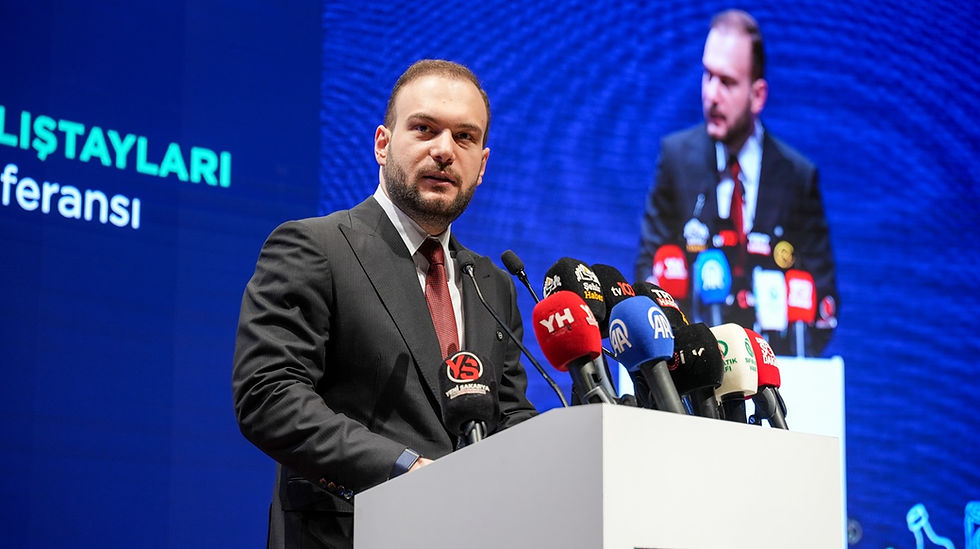
Workshops Contribute to Türkiye’s Climate Journey
Samed Ağırbaş, President of the Zero Waste Foundation and COP31 High-Level Climate Champion, stated in his speech that the Zero Waste Movement was launched in 2017 under the leadership of Emine Erdoğan. He emphasized that what began in Anatolia has now expanded beyond borders and transformed into a global movement embraced in 193 countries.
Highlighting the importance of the UN Zero Waste High-Level Advisory Board, Ağırbaş said:
“The decisions taken by the board are presented as recommendations to UN member states. These decisions contribute to transformation in many parts of the world. A new generation is emerging that separates waste even at home. Waste volumes in Türkiye are decreasing.”
Providing information about the COP31 summit to be held in Türkiye, Ağırbaş added:
“At COP31, where 197 parties will come together, we will discuss the future of the world and the global climate crisis. We expect more than 100,000 participants. As the COP31 High-Level Climate Champion, I will lead the mobilization of non-state actors such as NGOs, municipalities, students, youth, and women. We are traveling to different regions of Türkiye and across the world. I will visit the largest slum area in Africa, where more than one million people live, and organize a workshop. Today, due to environmentally insensitive practices by developed countries, we are facing a climate crisis. Access to water is decreasing for various reasons. We want to see a world again where water from our taps is drinkable. Our resources are limited, and we must protect them effectively.”

A Vision of Zero Waste Transformation
Prof. Dr. Hamza Al, Rector of Sakarya University, stated that they view zero waste not merely as an environmental policy but as a comprehensive transformation vision extending from production to consumption, and from individual habits to institutional processes. He underlined that zero waste and resource efficiency are of strategic importance for a sustainable economy:
“As Sakarya University, we approach zero waste as a holistic concept that should be addressed through education, research, and social contribution. We are implementing institutional transformation across the campus with an integrated waste management system, conducting awareness activities that transform the behavior of students and staff, and carrying out academic and applied studies in zero waste and sustainability. A standardized Zero Waste Management System has been established across all our campuses. Our storage facilities have been renewed, and our education and awareness efforts have been expanded.”
Zero Waste as a Scientific and Technological Transformation Model
Prof. Dr. Mehmet Sarıbıyık, Rector of Sakarya University of Applied Sciences, emphasized that Türkiye has set an example for the world with its Zero Waste Movement:
“We are going through a period in which the value given to bread, labor, and the environment—deeply rooted in Anatolian culture—is being rediscovered. Zero Waste is a scientific and technological transformation model that aims to achieve more production with fewer raw materials. In other words, it is a process of efficiency guided by reason. This understanding already exists in our culture. People of Anatolia know that blessings are not wasted and even water in rivers is not squandered.”

Deposit Return System
Fatih Turan, Director General of Environmental Management at the Ministry of Environment, Urbanization and Climate Change, stated that the Zero Waste Movement has reached a global scale. He noted that while the initiative started locally and expanded nationally, it has now evolved into a global movement:
“Launched in 2017 under the leadership of Emine Erdoğan, the recycling rate in Türkiye was around 13% at that time. By the end of 2025, this rate increased to 37.53%. More than 90 million tons of waste have been recovered. In Sakarya, 48 deposit return machines have been installed, and over 7 million beverage containers have been collected. By the end of this year, these machines will be expanded to all 81 provinces.”

Waste from 16 Districts Contributes to the Economy
Sakarya Metropolitan Municipality Mayor Yusuf Alemdar stated:
“This is not just an environmental or waste issue—it is a matter of vision and the future. Today, not only those who produce the most, but also those with ideas, determination, hopes, and dreams are making their voices heard globally. I would like to express my gratitude to our President and his team for breaking the pressures and discouragement faced by Anatolian people. We continue implementing projects that touch people’s lives. We strive to recycle waste and bring waste collected from 16 districts back into the economy.”
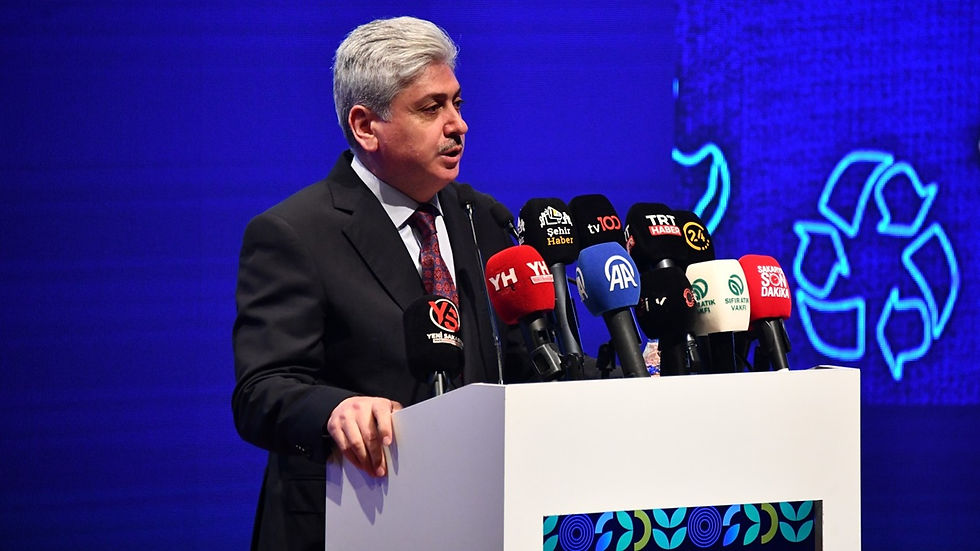
Sakarya: Prime Agricultural Land
Sakarya Governor Rahmi Doğan emphasized that Sakarya is one of the most beautiful cities in the world, covering approximately 4,800 square kilometers:
“With its rivers, plateaus, coastlines, and prime agricultural lands, Sakarya is one of Türkiye’s most valuable cities. As the Governorship, we are working to protect the environment. Sapanca is one of the rare lakes in the world, but it has been severely affected by pollution. We continue projects around the lake. Sakarya has first-class agricultural land, and we must protect it. We have also held a water workshop. As a city on the Black Sea coast, we are removing illegal structures along the shoreline. Mudurnu Stream, once heavily polluted, has now been restored to a clean state thanks to our efforts.”

Sakarya’s Strengths and Pressures Identified
According to workshop results, Sakarya’s key strengths include its high tourism potential, rich geographical and cultural structure, historical heritage, unique blend of blue and green landscapes, fertile agricultural lands, and strong position in industry and trade.
The main pressures threatening the city were identified as:
Unplanned urbanization
Waste management infrastructure challenges
Industrial facilities
Rapid population growth, migration, and earthquake risk
Increasing water and energy consumption
Traffic congestion
Climate change-related risks
Pressure on water resources
The workshop also highlighted that a lack of coordination among institutions hinders a holistic approach to environmental management. Insufficient recycling and waste separation systems, as well as the absence of a comprehensive waste disposal strategy, were noted as key shortcomings. Additionally, unsustainable consumption habits, increasing waste from industry, agriculture, and services, and limited access to financing for green transformation investments were identified as major challenges.

Strategic Zero Waste Targets for Sakarya
At the conference, it was emphasized that reducing waste is the fundamental prerequisite of a zero waste system. The strategic targets set for Sakarya include:
Providing zero waste training in public institutions and removing office trash bins (introducing dual waste separation systems instead)
Installing smart waste containers and separation systems in parks and public spaces
Implementing energy transformation projects in public buildings (solar energy, energy efficiency)
Collecting, storing, and safely disposing of industrial waste oils
Ensuring careful use of water resources in the Sapanca basin
Managing waste in events held in plateaus and similar areas under zero waste principles
Establishing collection points for agricultural chemical packaging and ensuring safe disposal
Cleaning Sapanca Lake and Sakarya rivers by removing abandoned fishing equipment and waste
Developing an eco-campus at Sakarya University of Applied Sciences with renewable energy and smart systems
Creating eco-friendly campus cafeterias eliminating single-use plastics and encouraging reusable bottles
Establishing sharing and reuse stations (books, electronics) on campuses
Implementing zero waste standards and green certification in student activities
Establishing an interdisciplinary R&D lab focused on waste-to-energy and recycling technologies
Conducting awareness campaigns on waste reduction and separation across all education levels
Producing animal feed from food waste in mass consumption areas
Using waste barriers to prevent pollution in Sapanca Lake and water resources
Creating environmental parks with sustainability-focused components such as air quality monitoring
Expanding the collection of vegetable waste oils across all 16 districts


Comments